
1
PARTIAL RECOVERY
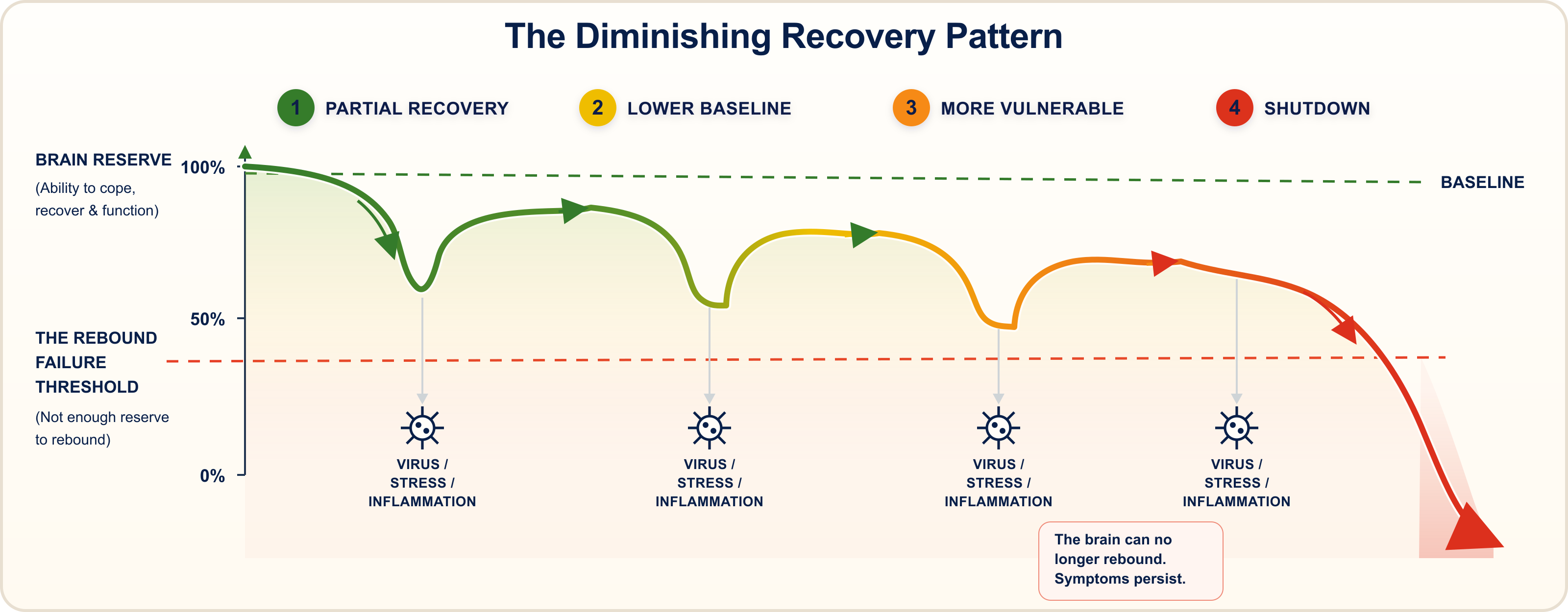
Recovery happens, but the drain is meaningful.
Feels better,
but not 100%
back to normal
but not 100%
back to normal
2
LOWER BASELINE
Improvement occurs, but not quite back to the old baseline.
Good days
mixed with
symptoms
mixed with
symptoms
3
MORE VULNERABLE
Flares come easier and recovery is smaller.
Triggered by
smaller stressors
or illness
smaller stressors
or illness
4
SHUTDOWN
Reserve is below the threshold. No rebound.
Symptoms are
severe and
persistent
severe and
persistent
THE CYCLE CAN RESTART AFTER REMISSION
With time, treatment,
rest & reduced
inflammation...
→
rest & reduced
inflammation...
Reserve
rebuilt
→
rebuilt
Back to a new
baseline
→
baseline
Then the same
pattern can begin
again.
pattern can begin
again.
Understanding this pattern helps us focus on rebuilding reserve, reducing inflammation, and supporting true recovery—before the next hit.